Root Canal Treatment
When infection reaches the inner pulp of a tooth, a root canal removes it, seals the canal, and saves your natural tooth — Dr. Priya's gentle technique makes it virtually painless.
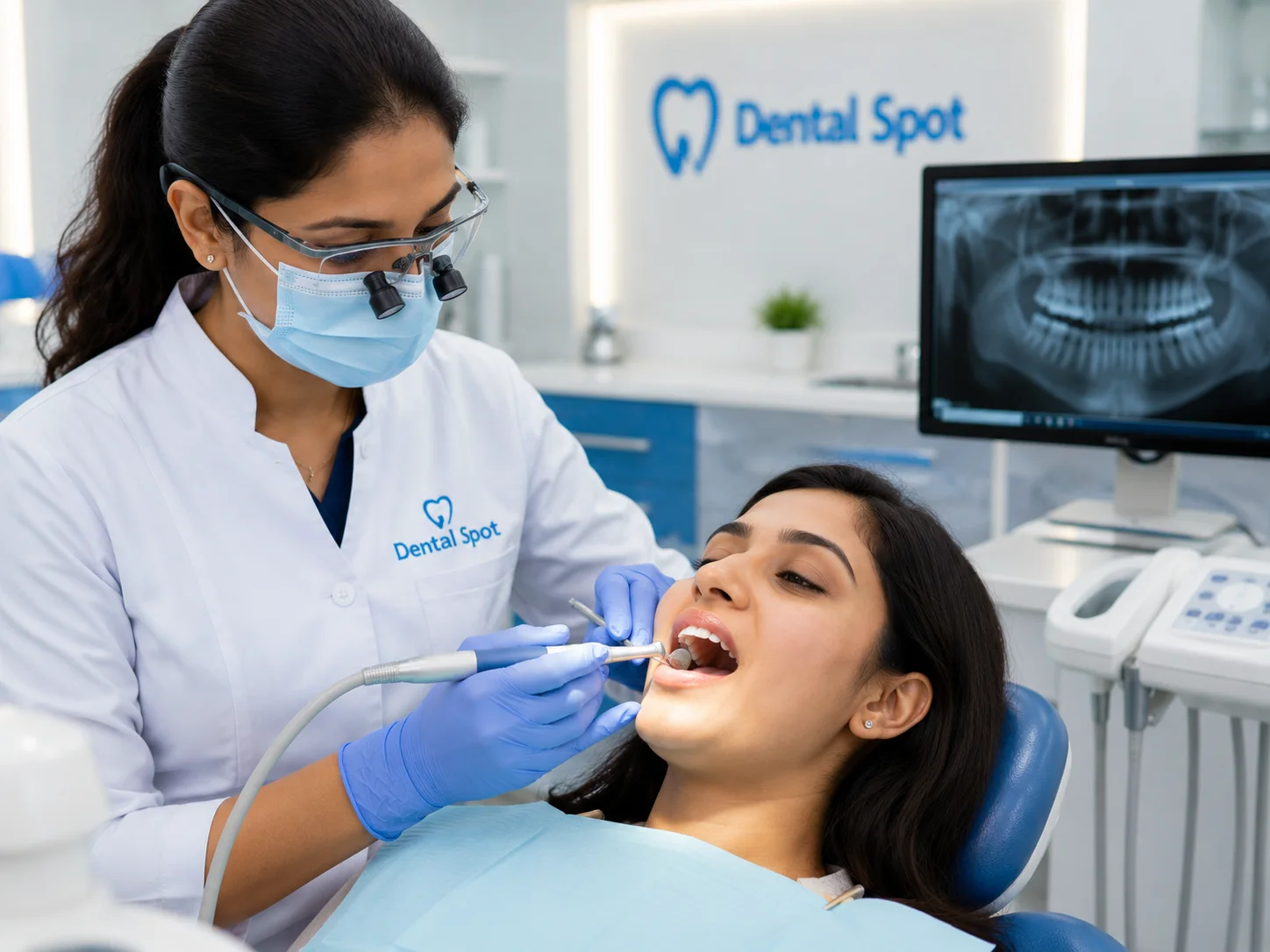
What makes it different here
- Painless modern technique
- Saves your natural tooth
- Followed by a durable crown
Your dentist

Dr. Priya Kumari
BDS, BIDSH (Patna) · Founder & Lead Dentist, Dental Spot
Good dentistry starts with listening. I take the time to understand what you need, explain exactly what I'm doing, and make sure you leave feeling confident — not just treated.
Main Road, Kankarbagh, Patna
What is root canal treatment?
Root canal treatment (RCT) is a procedure that saves a badly decayed or infected tooth instead of extracting it. When decay reaches the soft pulp inside the tooth — the part containing nerves and blood vessels — it causes severe toothache, sensitivity, or an abscess. During RCT, the infected pulp is removed, the canals inside the root are cleaned and disinfected, and the tooth is sealed and protected with a crown. Contrary to its old reputation, a modern root canal is virtually painless — it's performed under local anaesthesia and actually ends the pain the infection was causing. At Dental Spot in Kankarbagh, Patna, Dr. Priya completes most root canals in 1–2 comfortable visits using RVG digital X-rays for precision.
Benefits
- Saves your natural tooth — always better than extraction and replacement
- Ends the toothache — the procedure removes the source of pain, not just masks it
- Virtually painless with modern anaesthesia and gentle technique
- Usually complete in 1–2 visits at our Patna clinic
- Low-radiation RVG digital X-rays guide precise, thorough cleaning
What to expect
Your visit at our Patna clinic, step by step.
- 1
Diagnosis
An RVG digital X-ray confirms how far the infection has reached and whether RCT can save the tooth — you get an honest answer either way.
- 2
Anaesthesia & access
The tooth is fully numbed. A small opening is made in the top of the tooth to reach the infected pulp — you feel pressure, not pain.
- 3
Cleaning & shaping
The infected pulp is removed and each root canal is carefully cleaned, disinfected, and shaped.
- 4
Filling & sealing
The cleaned canals are filled with a biocompatible material and sealed to prevent reinfection.
- 5
Crown protection
A crown is placed over the treated tooth to restore full chewing strength — this step is essential for a lasting result.
Frequently asked questions
How much does a root canal cost in Patna?
At Dental Spot, root canal treatment starts from ₹3,000 per tooth. The final cost depends on which tooth it is (molars have more canals) — plus the crown, which is priced separately. You'll get a clear combined quote before treatment starts.
Is root canal treatment painful?
No — this is the biggest myth in dentistry. The tooth is fully numbed with local anaesthesia, and most patients feel nothing beyond mild pressure. Remember: RCT removes the infected nerve that was causing your pain. Most patients tell us the toothache before was far worse than the treatment.
How many visits does a root canal take?
Most root canals at our Patna clinic are completed in 1–2 visits of about 45–60 minutes each. Severely infected teeth occasionally need an extra visit for medication between cleanings.
Can I just remove the tooth instead?
You can, but keeping your natural tooth is almost always better and cheaper long-term. An extraction later needs an implant (from ₹25,000) or bridge to fill the gap — otherwise neighbouring teeth drift and chewing suffers. RCT from ₹3,000 saves the original.
Is a crown really necessary after RCT?
Yes, for back teeth especially. A root-canal-treated tooth becomes brittle over time, and a crown protects it from cracking under chewing force. Skipping the crown is the most common reason treated teeth fail later.
Still have questions? Come in any Sunday for a free consultation — no appointment needed.
Book an appointment